The Era of Self-Healing Spacecraft: Surviving the Cosmos


What if I told you that the self-repairing spaceships we grew up watching in sci-fi movies are being engineered in labs right now?
I was recently digging into the real, everyday threats of space exploration, and I have to admit, it terrified me. We often picture the cosmos as this peaceful, empty vacuum. But the reality is that a piece of space debris the size of a pebble, traveling at 28,000 km/h, can tear through standard steel hull plating like it’s wet paper.
The traditional solution has always been to build thicker walls or add more armor. But space is a game of mass, and every extra kilogram costs a fortune to launch. So, how do we protect our astronauts and our billion-dollar investments? The solution scientists are working on right now absolutely blew my mind, and I just had to break it down for you.
The Brutal Reality of the Cosmic Shooting Gallery
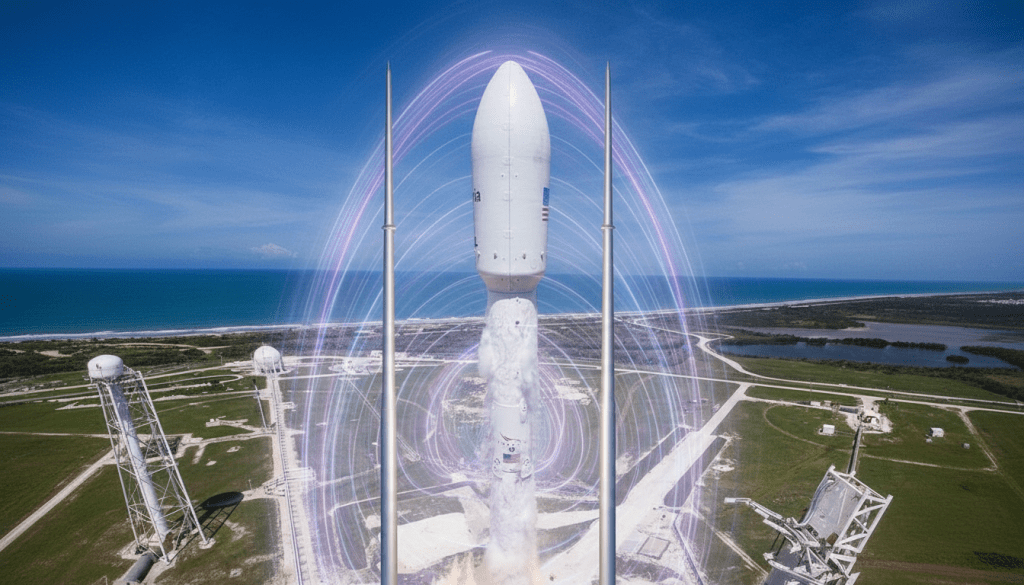
Before we get into the futuristic solutions, I think it’s important to understand what we are actually up against. The environment just outside our atmosphere is incredibly hostile.
When I looked at the data regarding Low Earth Orbit (LEO), I realized we aren’t just dealing with asteroids; we are dealing with our own trash.
- Micro-meteoroids: Tiny, natural rocks zipping through the solar system.
- Orbital Debris: Dead satellites, discarded rocket stages, and even lost astronaut tools.
- The Kinetic Energy Nightmare: Because there is no air friction to slow things down, a fleck of paint moving at orbital velocity hits with the explosive force of a hand grenade.
If we are going to build permanent outposts on the Moon or send crewed missions to Mars, relying on rigid, easily punctured metal simply isn’t going to cut it anymore. We need materials that fight back.


Terminator Tech: Ships That “Bleed” to Survive

This brings me to the incredible breakthrough in material science. Think of the liquid metal from Terminator—we are now looking at the development of smart alloys and carbon-fiber matrices packed with microscopic liquid polymer capsules.
Instead of waiting for an astronaut to patch a hole with a welding torch, the ship does it autonomously. Here is how I understand this fascinating process:
- The Impact: A micro-meteoroid strikes the hull, causing a micro-fracture or a complete puncture.
- The Trigger: The sudden shift in pressure and physical stress causes the embedded microscopic capsules to burst open.
- The “Bleeding” Process: A liquid healing agent is released into the cracks.
- Instant Solidification: Upon contact with a catalyst (or simply the vacuum and temperature shift of space), the liquid polymer hardens in seconds, completely sealing the wound and restoring structural integrity.
When I first read about this, it felt like magic. But it’s pure, brilliant chemistry. The spacecraft literally bleeds a resin that clots and scabs over, much like human skin repairing a cut.
Why Mars Demands Living Ships

I believe these next-generation materials are the only way we will survive deep space missions and build functioning Mars colonies.
Think about it: Earth is a safety net. If a satellite in LEO takes critical damage, it might burn up in the atmosphere, but nobody loses their life, and we can launch a replacement. But what happens when you are halfway to the Red Planet?
- No Tow Trucks in Space: You cannot call for backup when you are 100 million miles away from home.
- Resource Conservation: Astronauts won’t have to waste precious oxygen, time, and materials conducting dangerous spacewalks to fix minor hull breaches.
- Psychological Safety: Knowing your habitat actively repairs itself takes a massive psychological burden off the crew.
We are moving away from the era of static, dead metal. The future of aerospace engineering is about creating structures that mimic biology.
The Evolution of Smart Materials on Earth
What excites me even more is that this technology won’t just stay in space. Whenever I see a massive aerospace breakthrough, I immediately look for how it will change our daily lives.
Imagine self-healing concrete in our bridges, preventing catastrophic collapses. Think about airplane fuselages that patch their own micro-cracks during flight, or even smartphone screens that fix their own shatters while sitting in your pocket. The technology being developed to keep astronauts alive will eventually make everything we interact with safer and more durable.
Final Thoughts
The line between machine and biology is blurring. We are entering an era where our creations are no longer just tools, but reactive, self-preserving systems. I honestly believe that within our lifetime, flying in a “dumb” metal ship will seem as archaic as sailing a wooden boat across the ocean.
Because remember, the future isn’t fiction; it’s being coded and engineered right here at Metaverse Planet.
So, what do you think? Will our spacecraft become fully biological one day, perhaps even grown rather than built? Let me know in the comments! Come on, subscribe now and support me please.
You Might Also Like;